WOODWORKING · DIY · A HANDMADE HOME @grainbyjoy
GRAIN by JoyWOODWORKING PLANS · WORKSHOP STORIES · HOME
FIND YOUR NEXT GOOD THING
WOODWORKING PLANPullout Bin Kitchen Island
WOODWORKING PLANFarmhouse Media Console
WOODWORKING PLANRound Coffee Table
WOODWORKING PLANGeometric Hairpin Coffee Table
WOODWORKING PLANHollow Panel Waterfall Console
WOODWORKING PLANFarmhouse Console Table
WOODWORKING PLANBarn Door Console
WOODWORKING PLANBeginner Farm Table
WOODWORKING PLANFarmhouse Coffee Table
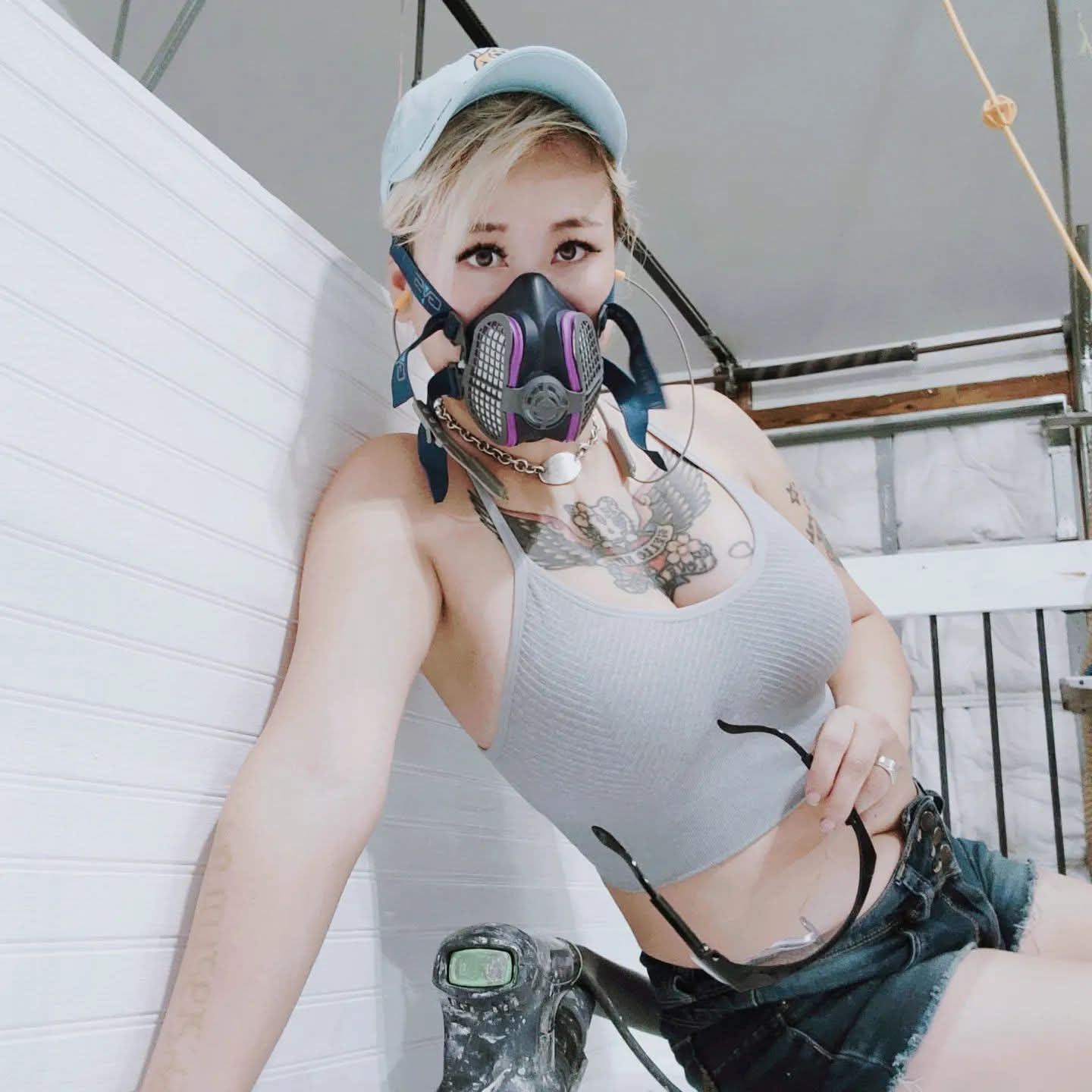
Joy in her workshop wearing a respirator while sanding a furniture pieceJOY ALEXANDER · MAKING FURNITURE SINCE 2013
WELCOME TO GRAIN BY JOY

Hi, I’m Joy
Let’s make something useful

I’m a Korean mom of two who came to the U.S. for love and found a whole new way to make things.

I worked in animation and game graphics studios in Korea. Now I build furniture for real homes and share the free plans, workshop tips, and stories behind each piece. I’ve been making furniture since 2013, and I still get excited about the next idea.

HOW IT BEGAN

A new place
A new way to make

I did not plan to become a woodworker. I went from art school and graphics studios in Korea to a life in the U.S. with the man I met while traveling. I kept wanting to make things, and one small furniture project led to the next.

Since 2013, the projects have grown into tables, cabinets, benches, and custom pieces for other homes. The photographs tell only part of the story. Here is how the ideas, the everyday work, and the people around me shaped what I make.

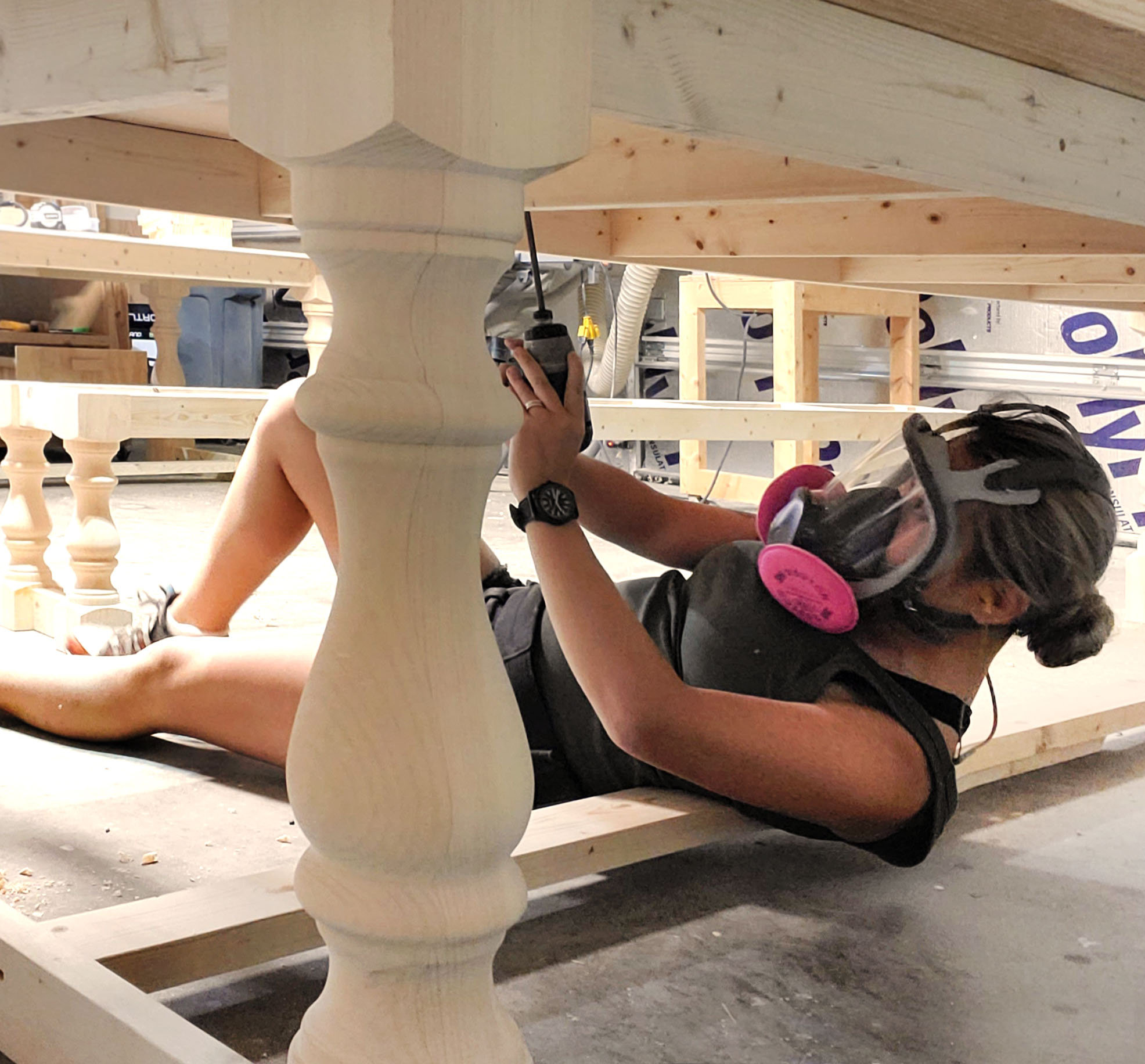
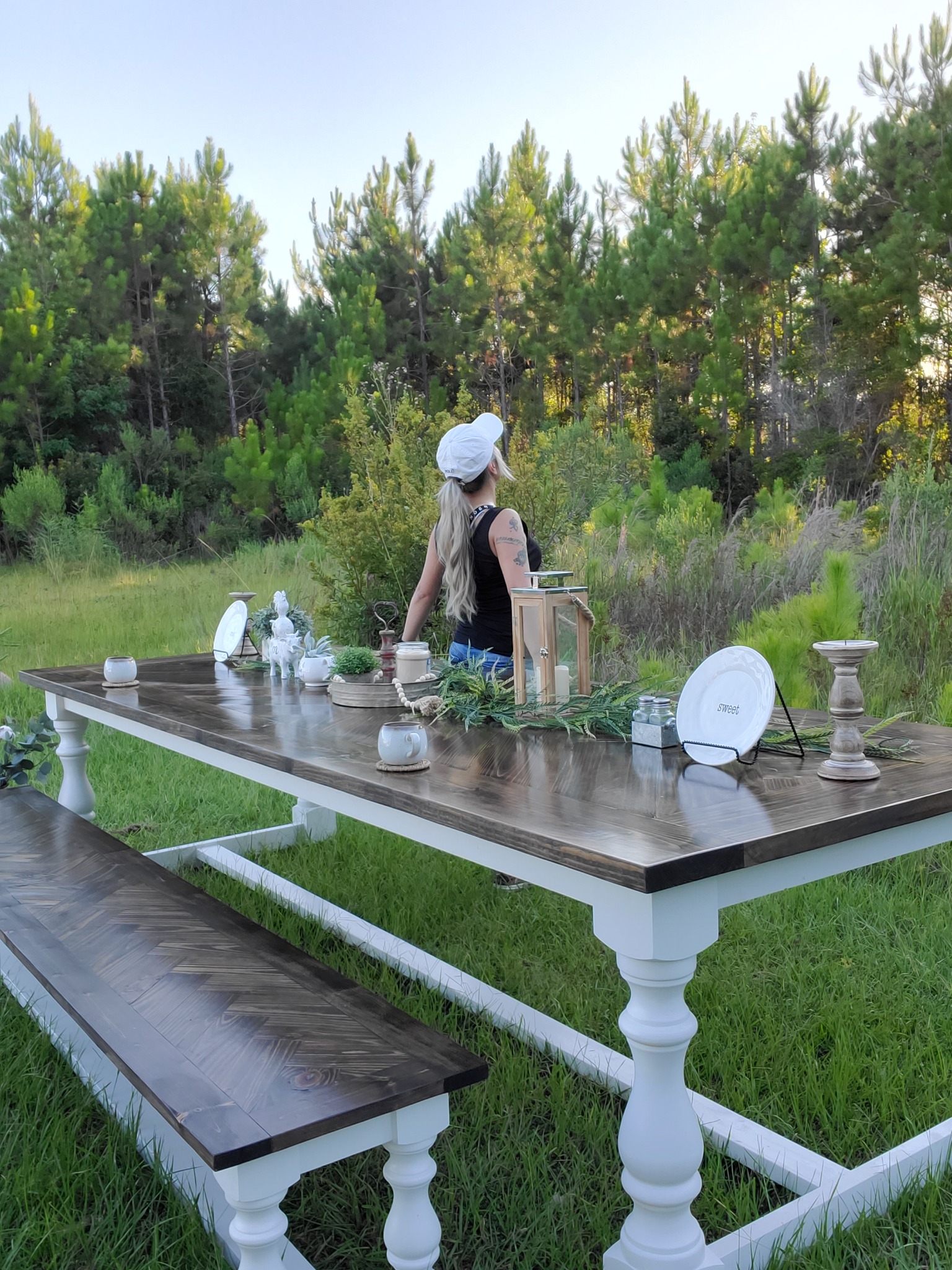
Joy working beneath a handmade turned-leg farmhouse tableFinished dark wood farmhouse table and matching bench with white turned legs outdoors
THE BEGINNING

An artist before I was a woodworker

Long before I had a workshop, I studied at a specialized arts high school in Korea. It was a selective school, but what stayed with me was the chance to experience many kinds of art alongside classmates who loved making things. Being around that kind of energy changes you. It taught me to pay attention to color, shape, proportion, and the little decisions that make one idea feel different from another.

I loved that art could begin almost anywhere: with a line on a page, a thought you could not quite explain yet, or a problem that needed a more imaginative answer. We were not all making the same thing, and that was part of the joy. Seeing other talented students work in their own ways taught me to stay curious. I learned to look again when an idea did not work the first time, to change one detail, and to keep going until it felt right.

That part of me never went away. Woodworking may look very different from drawing or working on a screen, but I still start by imagining how something might look and feel. I notice the rhythm of boards, the balance of a frame, and whether a piece leaves enough room for the people who will use it. My tools changed over the years. The urge to make something from an idea did not.
FROM THE SCREEN TO THE WORKSHOP

A creative life in Korea

After art school, I worked in animation and game graphics studios in Korea. It was creative work with real deadlines, real revisions, and a lot of hours spent making a detail better. A picture could look simple when it was finished, but I knew how much thought and persistence could sit behind it. I learned to care about the whole image and the tiny part that most people might not notice at first glance.

I liked making things for people to enjoy. I also liked the work behind the work: trying an approach, stepping back, noticing what was off, and trying again. That habit follows me into the workshop. A table that seems effortless in a room has its own collection of decisions hiding underneath—how the top meets the base, where the legs land, how the finish changes in daylight, and whether the furniture still makes sense when real life happens around it.

I did not know then that I would eventually trade digital tools for sawdust and wood grain. I only knew that I wanted a life with room to create. My career in Korea gave me a way to practice that every day. When my life took a completely unexpected turn, those years still came with me. They are part of how I see a piece before the first board is cut.

A VERY UNEXPECTED DETOUR

Love changed the map

I met my husband while traveling abroad. We fell for each other at first sight, and somehow a trip became the beginning of a whole new life. He was in the Navy, and love brought me from Korea to the United States. If you had asked the girl working in a graphics studio what she would be doing years later, I do not think she would have guessed that she would be building furniture in America.

Moving meant leaving behind the career and routines I knew. I was excited to be with the person I loved, but I also had to figure out who I was in a new place. That did not happen all at once. I was a wife, and later a mom of two, while still being someone whose hands and mind wanted to make things. I needed a creative path that could grow with this life rather than wait for the perfect time to appear.

It turned out that the answer was much closer than I expected. A home always has a place that could work a little better: a wall that needs storage, a table where everyone can gather, a bench that makes the entryway easier to use. I began looking at those ordinary needs as invitations. The more I noticed them, the more I wanted to try making the answer myself.

THE WORKSHOP FOUND ME

Ideas do not keep office hours

I started with the tools I had and learned through real projects. I measured, cut, joined, made mistakes, adjusted, and tried again. Some days the progress was small. Sometimes I had to take a piece apart and understand why it was not working. But every finished joint made the next one less mysterious. The first useful piece gave me the confidence to attempt another, and woodworking slowly became a language I could speak with my hands.

The ideas did not always arrive at a sensible time. Once in a while, one would turn up at 2 a.m. and I would get out of bed in my pajamas, too curious to leave it for morning. My husband has looked at me as though I had lost my mind. I can laugh about that now, but I know the feeling well: when I can almost see a piece taking shape, I want to find out if it will work. That energy is still part of me.

Making furniture since 2013 has taught me that enthusiasm and patience belong together. I can be excited about a new shape and still spend time checking a measurement or practicing a hole on scrap. A handmade piece asks for both. The part people see at the end is the polished top or the pretty corner. The part I remember is often the quiet work that made it possible to put the piece in someone’s home with confidence.

My first builds did not give me a perfect collection of tools or instant answers. They gave me experience. I learned how much easier a project becomes when I understand the basics instead of rushing past them. Now I want to pass on the small things that helped me: where to begin, how to plan a cut, how to think about a joint, and when to pause and check the actual wood in front of me.

A HOME TO MAKE IT FOR

The people give a piece its purpose

Our family life is part of every design decision I make. I think about how a table feels when people pull up chairs, where bags land after a busy day, and whether a cabinet helps a room breathe. A piece can look beautiful in a photograph, but I want it to be useful on an ordinary Tuesday too. My husband and our two kids remind me that a home is lived in, not staged for a picture.

Custom work taught me to listen to other homes as well. The right size for one room might be completely wrong for another. A favorite finish can make an old piece feel like it belongs with something new. A customer may start with a coffee table and later discover that the same feeling would work in a console or another corner. I love watching a home grow around pieces made for the people in it.

That is why Grain by Joy has both finished stories and practical starting points. I share free illustrated woodworking plans so you can see the shape, materials, and steps before you build. I share workshop tips because a small skill can unlock a bigger project. And I share the real rooms and the work behind them, because the best part of making furniture is seeing where it finally belongs.

If you have never built anything before, you are welcome here. Start with one useful piece. Read the plan, ask questions, try the unfamiliar step on a scrap board, and let your hands learn. If you have been making things for years, I hope you find an idea to take in your own direction. I am still curious, still learning, and still likely to get excited about a project at an unreasonable hour.

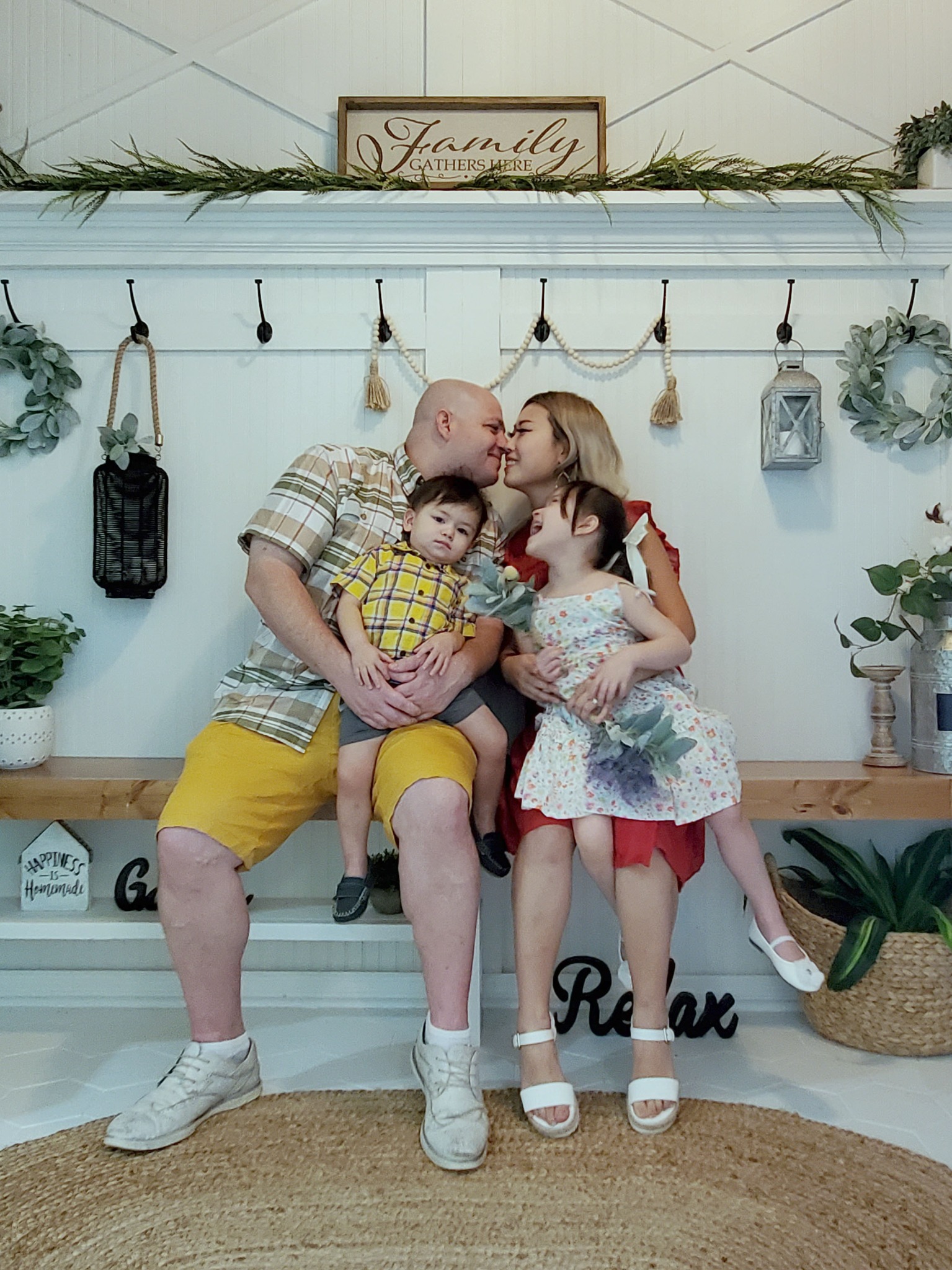
Joy with her husband and two children beside handmade entryway furniture
MADE FOR PEOPLE AND THE PLACES THEY LOVE

More than a finished photo

My husband, our two kids, and the homes that have welcomed my work keep me thinking about the people who will actually use each piece. I want a bench to make room for the family, a cabinet to fit its corner, and a table to be sturdy enough for the everyday mess and the special days.

If you are new to building, start with one useful thing for your own home. Read the plan, try the unfamiliar step on scrap, and keep going. That is how I learned, and I am still learning with every build.

Joy